
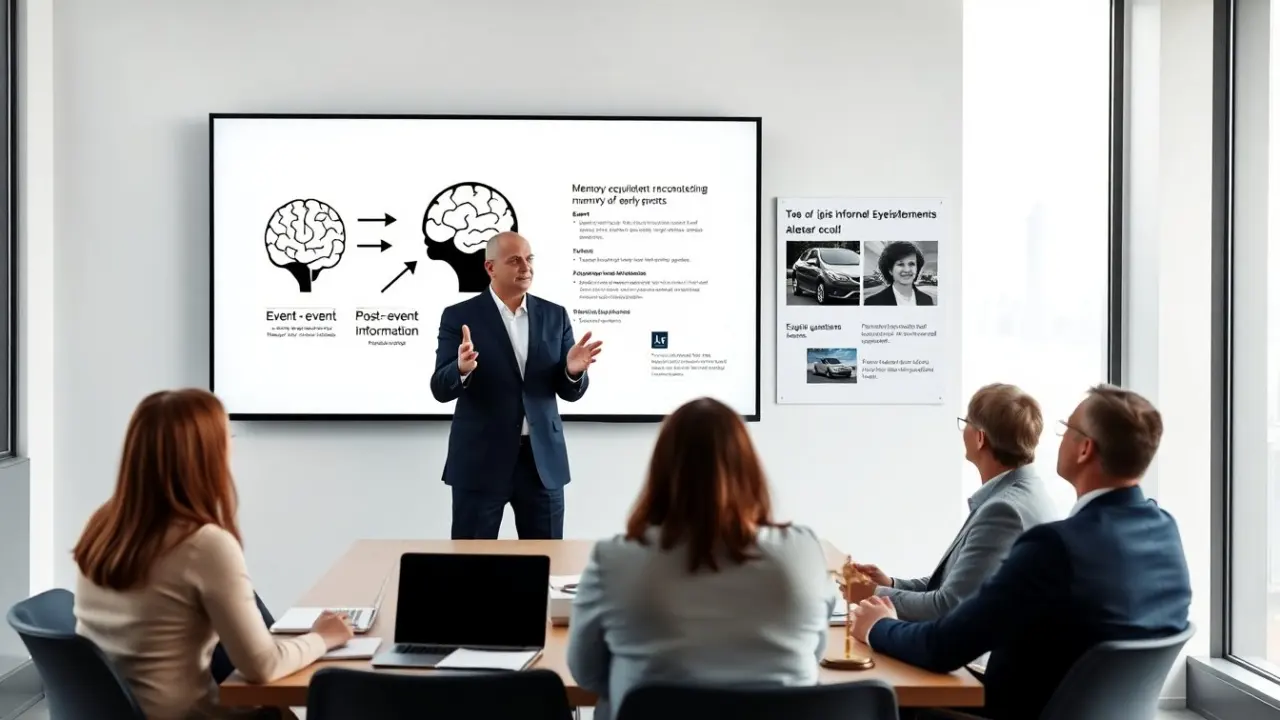
The misinformation effect psychology definition states that post-event information can change a person’s memory. Researchers use the phrase to describe how new details alter recalled events. The concept matters for law, medicine, news, and daily life. This article defines the effect, explains how memory reconstruction creates false memories, and summarizes key experiments and risk factors.
Key Takeaways
- The misinformation effect psychology definition describes how exposure to incorrect post-event information can distort a person’s memory of the original event.
- Memory reconstruction combines initial memories with later information, sometimes creating false memories due to source monitoring errors.
- Classic experiments show that subtle changes in language or details after an event can significantly alter people’s recalled memories.
- Factors like leading questions, delays, stress, and individual traits increase susceptibility to the misinformation effect.
- Using neutral interview techniques and recording events accurately can help reduce the impact of misinformation in legal, medical, and everyday contexts.
What The Misinformation Effect Is: A Clear Definition
The misinformation effect psychology definition refers to memory distortion that follows exposure to incorrect information after an event. Memory stores an initial trace. Later information can overwrite, blend with, or change that trace. Witnesses or patients then report memories that reflect the later information rather than the original experience. Psychologists measure the effect by comparing reports from people who receive post-event misinformation with reports from people who do not. The definition focuses on altered recall rather than deliberate lying.
How Memory Reconstruction Produces False Or Altered Memories
Memory does not act like a video recorder. The brain encodes fragments at the time of an event. Later, the brain reconstructs a full memory from those fragments and from related knowledge. When post-event information arrives, the brain may incorporate it into the reconstruction. Source monitoring errors then cause people to misattribute the origin of a detail. The result is a memory that feels complete and confident but that includes incorrect elements. Repeated retrieval can strengthen the false version.
Landmark Experiments That Defined The Misinformation Effect
Early laboratory work established the misinformation effect psychology definition with clear methods. In a classic study, participants viewed a traffic accident film. Later, experimenters asked questions with different verbs. People who heard stronger verbs reported higher speeds and recalled broken glass that did not exist. Other experiments replaced factual details, such as the color of a car or existence of a stop sign. Researchers also tested memory for real events and found similar distortions. These studies show that simple post-event prompts can change core details.
Key Factors That Increase Susceptibility To Misinformation
Several factors raise the chance that people will accept post-event false details. The factors act on encoding, retention, and retrieval. They include leading questions, delays between event and report, stress at encoding, and similarity between original and post-event details. Individual traits also play a role. Age, cognitive load, and prior beliefs change how people accept new details. Social pressure and repeated exposure to the wrong detail also increase acceptance of the false memory.
Leading Questions And Suggestive Language
Leading questions change how people answer. A question that implies a detail makes that detail more likely to be reported. For example, asking “Did you see the red car?” increases reports of a red car even if no red car existed. Suggestive language introduces specific images, and those images become part of the memory reconstruction. Interviewers who use neutral wording reduce the effect. Training police and clinicians to avoid leading language lowers the risk of false reports.
Real-World Consequences: Law, Media, Health, And Everyday Decisions
The misinformation effect psychology definition has practical consequences. In law, jurors may hear altered witness accounts. Wrong details can affect verdicts and sentencing. In media, repeated false claims can change public memory of events. In health, patients may misremember symptoms after reading online reports. In daily life, people may recall conversations or commitments incorrectly. Systems that record events, use neutral interview protocols, and treat repeated reports cautiously can reduce harm.