
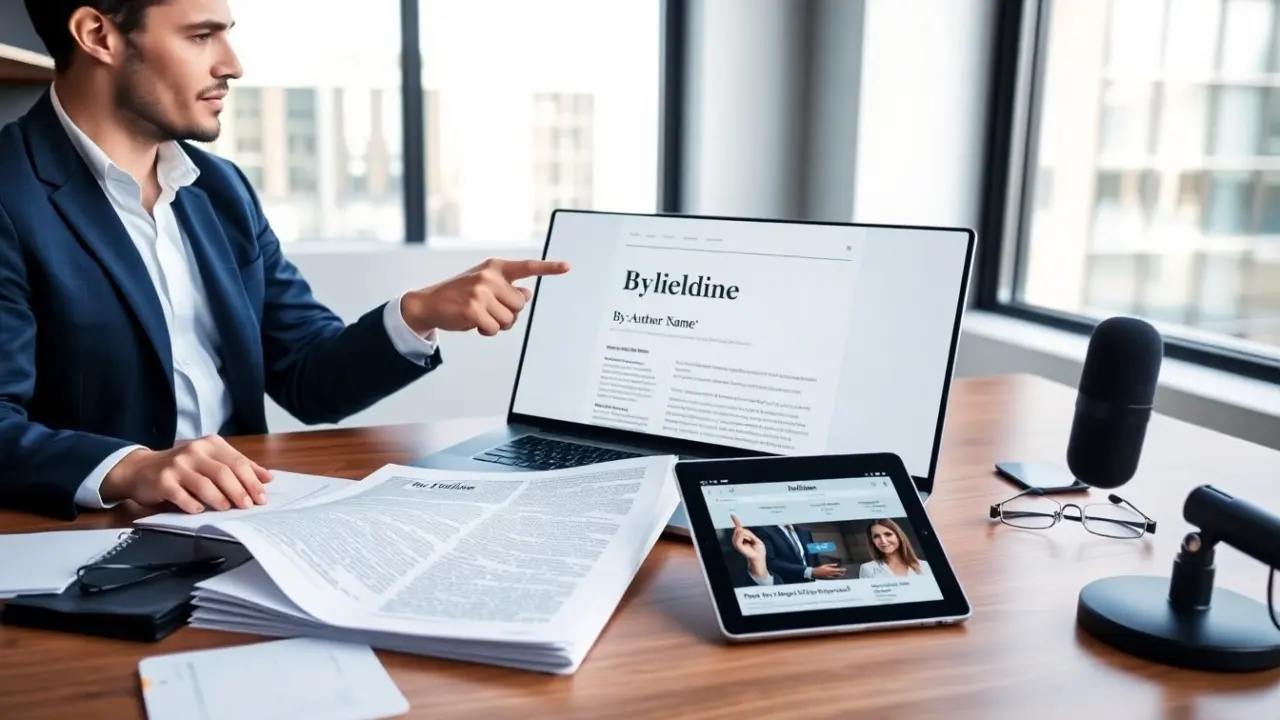
whats a byline: it appears at the top of an article and names the writer. At its simplest, a byline tells readers who wrote the piece and often shows the date or a short job title. The line helps readers identify authors, gives credit, and makes it easier to follow a writer’s work across a publication. This guide explains what a byline is, where it typically appears, how bylines differ across media, and practical rules for editors and writers on writing and placing bylines. It aims to give clear conventions, common variations, and useful examples so editors and writers can apply consistent byline practices.
Key Takeaways
- A byline is a line under or near the headline that names the article’s author and often includes the date or role.
- Bylines give writers credit, build credibility, and hold authors accountable for their work.
- Print bylines are typically fixed and concise; online bylines can include photos, links, and update information.
- Effective bylines are brief, clearly placed beneath the headline, and avoid long descriptions—use separate bios for context.
- Including a byline helps readers identify the writer and promotes trust in the content while supporting discovery of related work.
- For multiple authors, bylines list names by contribution and clarify roles, which enhances transparency and attribution.
Definition: What A Byline Is And Where It Appears
A byline is the visible line in a piece of journalism that credits the author or authors of the story. In most articles it appears directly under the headline or at the top of the text, but exact placement can vary with design and medium. A byline can be as simple as the author’s name, or it can include a job title, location, or the publication date when context is helpful.
Beyond location, a byline functions as a metadata element that connects a story to its creator. It enables readers to follow an author’s work, helps editors manage assignments and corrections, and supports the publication’s archival and search processes. In collaborative pieces, the byline may list multiple contributors or indicate a lead author with a parenthetical note such as “with” or “and” to clarify roles.
Why Bylines Matter: Credibility, Accountability, And Attribution
Bylines matter because they attach responsibility and recognition to content. When a named author is visible, readers can assess the piece in the context of that writer’s past work, expertise, or potential biases. This supports credibility: known authors with relevant experience increase reader trust in reporting or analysis.
Accountability is another key function. A byline makes it clear who is responsible for the information, which matters when factual errors require correction or when questions arise about sourcing. Editors use bylines to track contributions and to determine who should be consulted for edits or follow-ups. For freelancers and new writers, consistent bylines build a public portfolio that can lead to future assignments.
Attribution has legal and ethical dimensions. Properly crediting authors reduces disputes over ownership and clarifies which individuals produced original reporting, commentary, or creative work—important for copyright, reprint permissions, and professional recognition.
Bylines In Different Formats: Print, Online, And Broadcast
Different media handle bylines according to their constraints and audience expectations. In print newspapers and magazines, bylines are often concise and designed to work with layout and typography; they may include a short title or location if that context is relevant to the story. Print bylines are essentially permanent once printed and form part of the issue’s record.
Online, bylines are more flexible. They commonly include the author’s name, publication date and time, and sometimes an “updated” timestamp. Online bylines often link to author profile pages, include small photos, and may show social handles to encourage reader engagement. Editors can update online bylines to add contributors, correct credits, or append editor’s notes—changes that are visible to readers and can be timestamped for transparency.
In broadcast media, bylines are rarely presented on air in the same way, because scripts and on-air reads emphasize anchors and reporters. Instead, broadcast productions credit writers in program notes, on a website, in captions, or in episode credits. Wire services and syndicates also use bylines and typically include agency tags that clarify sourcing and distribution.
Print vs. Online Bylines
Print bylines typically prioritize brevity and fit within strict design constraints: a name, sometimes a city or desk, and occasionally a short job title. Designers coordinate type size and placement so the byline complements the headline and the page aesthetic. Because printed pages cannot be changed after distribution, accuracy at the time of publication is essential.
Online bylines let publications add interactive and contextual elements: linked names that point to archives, author bios with contact information, and metadata that helps search engines and content management systems. Online platforms also allow for more nuanced byline conventions—such as indicating a story is “staff” written, “contributed by” freelancers, or “updated” to reflect ongoing coverage. While this flexibility is useful, editors should set clear style rules to keep bylines consistent across the site.
How To Write An Effective Byline (Style, Length, And Placement)
Keep bylines short and consistent: the author’s full name is standard, using the form the writer prefers (first + last name, initials, or a byline name they regularly use). Place the byline directly beneath or very close to the headline so readers can quickly see who wrote the piece. For online stories, include the publication date and time in the same area when the timing of the information matters.
Avoid packing the byline with long role descriptions or biographical details; those belong in a separate author bio or profile page. If additional context is important—such as “investigative correspondent” or “guest contributor”—keep it concise and consistent across the publication. For multi-author pieces, list contributors in order of their relative contribution and add brief role tags if it clarifies who did reporting, editing, or analysis.
Practical tips for editors and writers:
- Establish a style guide rule for byline format and apply it site-wide to maintain consistency.
- Use linked author pages online to give readers more background without overloading the byline line itself.
- For corrections or substantial updates, append an editor’s note or update line rather than altering the original byline without explanation.
- When attribution is complex—e.g., aggregated content, wire copy, or collaborative investigations—use clear qualifying phrases like “from the staff of,” “in collaboration with,” or “with reporting by.”
By following these conventions, publications make bylines useful for readers, fair for writers, and manageable for editors—ensuring the simple question “whats a byline” has a clear, consistent answer in practice.