
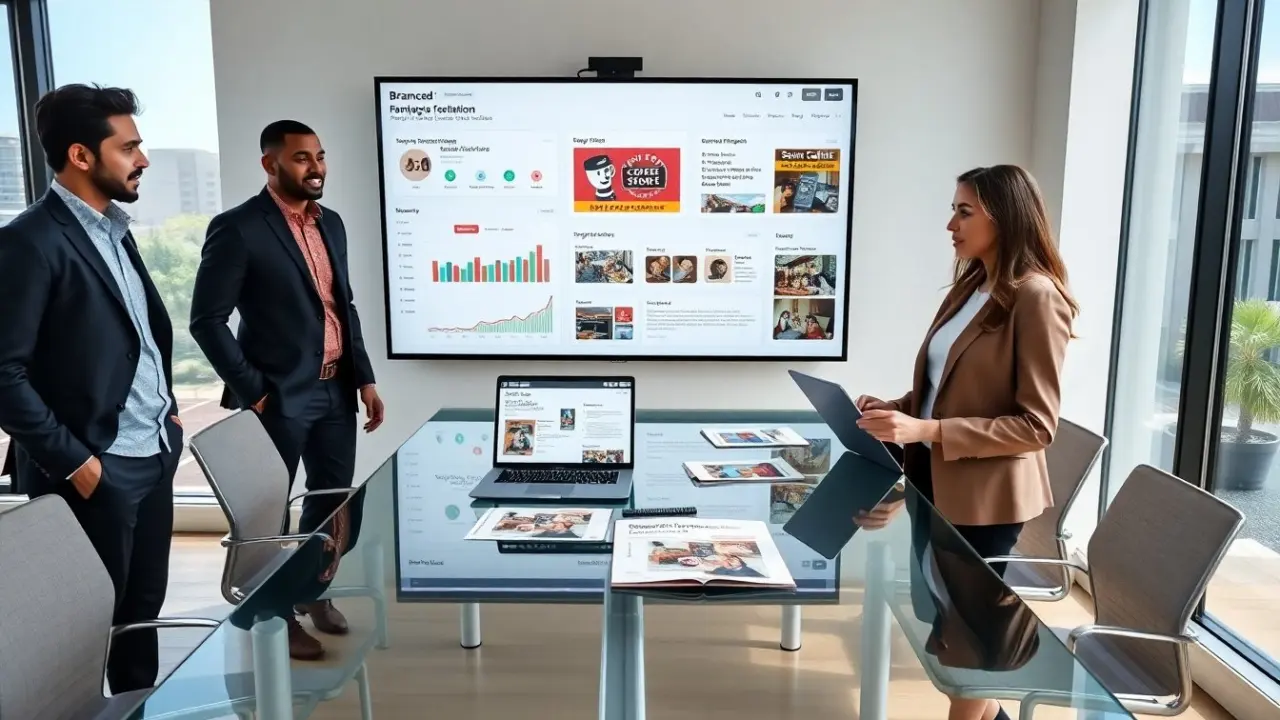
This public relations campaign example shows steps a team used to rebrand a local coffee chain. The case will show goals, audiences, messages, tactics, timeline, and results. It will show key metrics and lessons. The reader will see concrete actions and measurable outcomes. The writing will stay direct and clear so the reader can use the example for planning. Below we expand each element so the reader can translate the approach to a different brand or market size.
Key Takeaways
- An effective public relations campaign example starts with clear goals, defined audiences, concise key messages, assigned team roles, and measurable metrics.
- The local coffee chain rebrand case shows how combining earned media, events, and social outreach over six weeks can shift brand perception successfully.
- Common PR tactics include press releases for newsworthy stories, community events for local engagement, influencer visits for visual impact, and social ads when organic reach is limited.
- Measuring success involves tracking visits, coverage, impressions, social engagement, and media value through a dashboard and comparing results against baseline data.
- Reporting should include an executive summary with visual charts and recommend specific next steps based on data insights to inform decision makers.
What Makes An Effective Public Relations Campaign
An effective public relations campaign example begins with clear goals. Goals in this context are outcome-oriented and measurable — for instance, changing brand perception among local residents, increasing first-time visits, or growing repeat customers. Equally important is a realistic timeline that sequences research, outreach, events, and measurement. The team defines the primary audience (core neighborhood regulars and nearby workers) and secondary audiences (local media, influencers, and community groups). Messages are kept to three concise pillars that address what the brand stands for, how it is different, and what action the audience should take.
Roles are explicitly assigned: a media lead handles press outreach and media lists; a content lead produces photography, copy, and social posts; an events lead coordinates logistics and partnerships; and an analyst sets up tracking and dashboards. Measurable metrics are agreed up front and mapped to objectives — reach and sentiment for awareness goals, event attendance and foot traffic for local engagement, and conversion measures for trial and repeat visits. Before full launch, the team runs small message tests through surveys or social A/B tests to validate tone and clarity. Throughout the campaign, a cadence of brief daily check-ins and weekly reviews lets the team adjust tactics based on early feedback and real-time data.
Real-World Example: Local Coffee Chain Rebrand Case Study
This public relations campaign example follows a small coffee chain that rebranded across five neighborhoods. The company retained a lean PR team and a local designer to preserve authenticity. The campaign objective was to shift perception from “cheap and convenient” to “community hub with quality offerings,” and the team translated that objective into three measurable outcomes: increased local press mentions, higher first-time visits during the campaign window, and improved sentiment among surveyed patrons.
The six-week plan was divided into phases: research and prep, soft launch to local influencers and media, a series of neighborhood events, and a sustained follow-up phase to convert visitors into regulars. Budget priorities favored earned media outreach, event logistics (permits, sampling supplies, signage), and a small targeted social ad budget to boost announcements in the neighborhoods where organic reach was thin. The team assembled a media list focused on local outlets, lifestyle reporters, and community blogs; they drafted a concise press release and prepared high-quality imagery and a fact sheet that highlighted the rebrand narrative and community partnerships.
Execution included coordinated media visits to flagship locations, invitation-only tastings for neighborhood influencers, weekend pop-up events with local musicians, and a loyalty sign-up incentive to capture visitor contact details. The team tracked metrics daily via a shared dashboard and held a weekly review to surface wins and course-correct. Coverage was monitored for message alignment and sentiment, while events were evaluated on attendance, sample redemption, and new sign-ups. Qualitative feedback from staff and attendees also informed small-message tweaks during the campaign. At the end of the window, the rebrand was positioned as a neighborhood gathering place rather than just a low-cost option.
Common PR Tactics And When To Use Them
This public relations campaign example highlights common tactics and their use cases so readers can choose the right mix for their objectives. Use a press release when there is a clear, newsworthy angle — for example, a rebrand that includes community programming or a new menu sourced from local producers. Press releases work best when supplemented by a targeted media list and personalized outreach that explains why the story matters to each outlet.
Media tastings and product samplings are effective when the experience itself convinces people — invite reporters and local influencers to experience the product firsthand so their coverage includes sensory detail. Community events and pop-ups work well to drive local foot traffic and to create shareable moments that local media and residents want to cover. Pair events with clear calls to action, such as loyalty sign-ups or coupon redemption, so visit behavior can be measured.
Invite influencers for short, well-scripted visits when visual content is essential to drive interest; provide them with a media kit and suggested talking points so messaging stays consistent. Use email outreach and follow-up sequences to convert attendees into repeat customers, and segment lists based on activity so messaging is relevant. Use social ads selectively to amplify announcements in neighborhoods where organic reach is insufficient — target by location and interests to increase cost efficiency. Finally, use monitoring tools and listening platforms to watch coverage, sentiment, and emergent issues in real time, allowing for rapid response or adjustment of tone and tactics.
How To Measure Success And Report Campaign Results
The team used a simple dashboard for this public relations campaign example that combined quantitative and qualitative measures. Core metrics included earned media coverage (mentions and reach), social impressions and engagement, event attendance and sign-ups, website or landing page visits, and direct indicators of trial such as coupon redemptions or loyalty enrollments. Baseline metrics collected before launch provided a comparison point so the team could show lift across these dimensions.
Measurement also included sentiment analysis on coverage and social posts to assess whether the rebrand messages were understood and adopted. The analyst tracked not only volume but also the prominence and tone of placements — noting whether mentions were feature-length stories, brief mentions, or social posts with high visual engagement. The team calculated conversion-oriented ratios such as visits per event attendee and sign-ups per media mention to understand efficiency without inventing claims about financial return.
Reporting to leadership condensed findings into a concise executive summary with visual charts (trend lines for coverage and visits, pie charts for channel mix, and tables listing top placements). The report highlighted top-performing tactics, lessons learned, and suggested next steps such as extending what worked, testing new messaging in underperforming neighborhoods, or increasing investments in the most efficient channels. Clear action items tied to the data helped decision makers choose which initiatives to scale and which to sunset.